

Cycling Environmental Impact: How Your Bike Saves the Planet Every Day
|
|
Time to read 7 min

|
|
Time to read 7 min
Today, April 22, 2026, marks another Earth Day - a global milestone that serves as a sobering reminder of our collective responsibility to the only home we have. As we watch climate patterns shift and environmental concerns reach a boiling point, the search for actionable solutions has never been more urgent. While large-scale policy changes are essential, the power of individual choice remains a cornerstone of the green movement. Among the most effective tools at our disposal, the cycling environmental impact stands out as a genuine game-changer. It isn't just about fitness or saving a few dollars on gas; it’s about a fundamental shift in how we inhabit our cities and interact with the biosphere.
Recent research published in the Proceedings of the National Academy of Sciences (PNAS) has finally put hard numbers behind what enthusiasts have claimed for years: the cycling environmental impact could be a primary lever in hitting global emissions targets. A comprehensive study analyzing 11,587 cities from 121 countries revealed that if every city worldwide prioritized bicycle networks the way Copenhagen does, we could reduce private vehicle emissions by up to 6% globally. To put that in perspective, we are talking about a shift that would generate health benefits worth approximately $435 billion every single year.
The cycling environmental impact represents one of the most accessible ways for a regular person to make a dent in the climate crisis. Every time you choose your bike over a car, you aren't just commuting; you’re actively contributing to cleaner air, reduced greenhouse gas emissions, and a lighter footprint on our natural resources.
Table of content
To truly understand the cycling environmental impact, we have to look at the data. The largest study ever conducted on active transport used a globally consistent dataset - Google Environmental Insights Explorer (EIE). This allowed researchers to analyze travel patterns across six continents, giving us a "birds-eye view" of how the cycling environmental impact scales from a single street to an entire planet.
The numbers from the PNAS study are staggering. Currently, walking accounts for about 14.3% of trips globally, while cycling sits at 2.1%. On the surface, 2.1% might seem negligible. However, when you look at the aggregate, the cycling environmental impact becomes a massive force. According to the research, if every city increased its bicycle network to at least the level of Copenhagen (which has ~44.3 km of bike facilities for every 100 km of road), the world would prevent 358 billion kilometers of car travel and 305 billion kilometers of motorcycle travel annually.
The reason the cycling environmental impact is so potent is simple: bicycles and walking produce virtually zero pollution during use. Unlike electric cars, which still require heavy mineral extraction for batteries and energy from the grid, a bicycle is as close to "net zero" as a vehicle can get. As the study notes, these trips "emit practically no carbon or harmful air pollutants."
The cycling environmental impact varies wildly depending on where you live, and the research highlights why local decisions are so critical. In Northern European hubs like Amsterdam and Copenhagen, the cycling environmental impact is maximized because cycling isn't a hobby - it’s the default. In these cities, nearly half of all trips are made on two wheels.
However, the PNAS research found surprising success stories outside of Europe. Clusters of high-cycling cities are evident in Latin America, Japan, Bangladesh, and Morocco. This is a crucial takeaway: the cycling environmental impact isn't a luxury reserved for wealthy Western nations. It is a universal solution that works anywhere the right environment is provided.
Even within a single country, the differences can be stark. In the Netherlands, some cities have a cycling share of 1.7%, while others hit 36.2%. In Japan, while the median city sits at 1.2%, suburbs of Tokyo and Osaka exceed 6%. This tells us that the cycling environmental impact isn't just a result of "culture", it’s a result of deliberate urban planning.
When we talk about the cycling environmental impact, we have to address the "why." What makes people actually get on a bike? The research identified several key pillars that drive active travel.
The study found that population density is the variable with the greatest explanatory power for walking and cycling. When a city is dense, destinations are closer. The cycling environmental impact thrives in "15-minute cities" where your grocery store, office, and gym are all within a 3-mile radius. In these environments, the car becomes a burden - hard to park and slow in traffic - while the bike becomes a tool of freedom. Moving from the density of a city like San Francisco to a denser city like Taipei is associated with a significant increase in the share of travel by walking and cycling.
Many skeptics argue that bike lanes are a waste of space, but the data suggests otherwise. The cycling environmental impact grows exponentially with infrastructure. The researchers found that each new kilometer of bike lane is associated with approximately 13,400 additional kilometers of bicycle travel annually in the median city. It creates a "multiplier effect", as more people ride, it becomes safer, and as it becomes safer, even more people join in.
One of the most human parts of this research was the finding on weather. Many people believe the cycling environmental impact is limited to sunny climates. The data proves this wrong. There was almost no significant relationship between annual rainfall and cycling rates. People in rainy cities will still ride if the infrastructure is there. While extreme heat or cold did have an effect, "harsh" weather wasn't the dealbreaker we often assume it is.
Terrain does matter. Flatter cities naturally have higher cycling rates. However, this is where the cycling environmental impact is evolving. In 2026, the e-bike has become a primary mode of transport. By flattening hills and extending the range of the average rider, e-bikes are bringing the cycling environmental impact to hilly regions that were previously car-dependent.
We can't talk about the cycling environmental impact without talking about the wallet. The research found that gasoline prices are the primary driver of cycling rates at a national level. When gas prices rise, people look for alternatives. But there’s a deeper economic layer here: as countries become wealthier, the cycling environmental impact often increases because people start choosing bikes for health and environmental reasons rather than out of necessity.
This shift is vital. For the cycling environmental impact to reach its full potential, it needs to be seen as a superior way to travel - faster, funnier, and cleaner - not just a fallback for when you can’t afford a car.
While Copenhagen is the gold standard for separated bike lanes, the research highlights other models. Cities like Osaka, Japan, achieve high active travel shares with less extensive separated infrastructure by using a network of narrow streets with slow-moving traffic. In these "shared spaces," different road users coexist safely.
This is an important lesson for the cycling environmental impact: there isn't just one way to win. Some cities will build high-tech bike superhighways, while others will simply slow down the cars and make the streets welcoming for people. Both approaches contribute significantly to the global cycling environmental impact.
If we want to maximize the cycling environmental impact, we have to treat our bicycles as the valuable environmental assets they are. Just as a city must maintain its bike lanes, an individual must maintain their bike. A bike that rusts in a backyard isn't helping the planet.
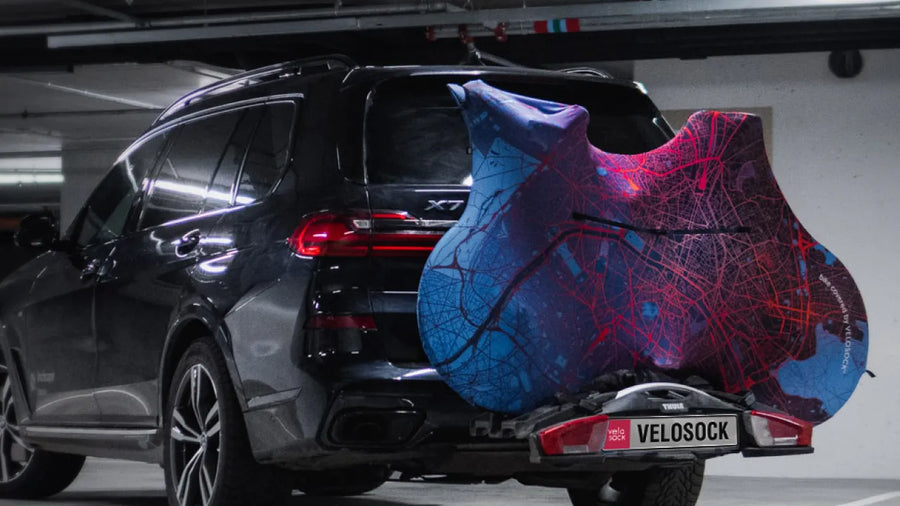
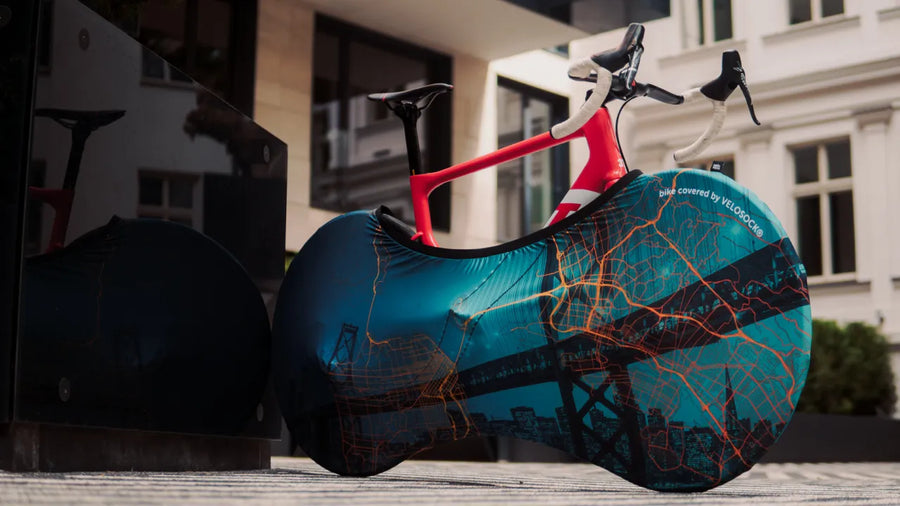
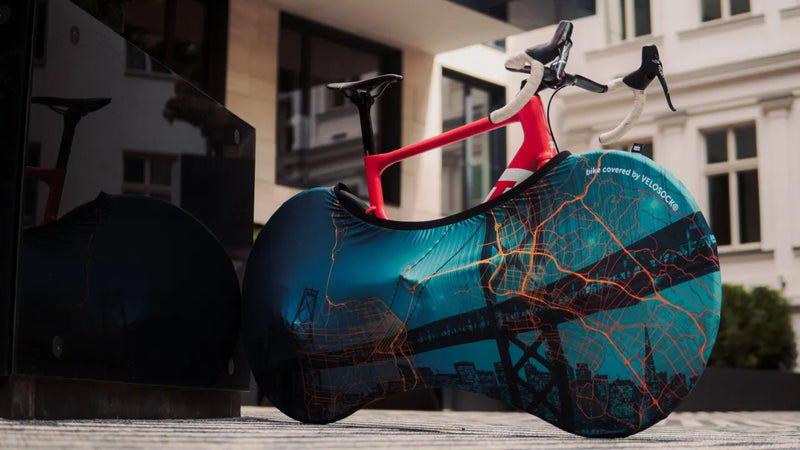
Proper storage is a small but significant part of the cycling environmental impact. By using quality covers and maintaining your gear, you ensure that your "green machine" is always ready for the road. This longevity is the definition of sustainability. Our bicycle covers are designed with this in mind, protecting your investment so you can continue to contribute to the cycling environmental impact day after day, year after year.
The research demonstrates that the cycling environmental impact documented here is one of the most promising solutions for modern urban challenges. The potential benefits - a 6% reduction in emissions and nearly half a trillion dollars in health benefits - justify major policy shifts.
However, it isn't just about what mayors and urban planners do. The cycling environmental impact reaches its full potential through the sum of our individual actions. Every kilometer you ride is a data point in favor of a cleaner world.
As we navigate the rest of 2026 and beyond, the environmental impact from cycling offers a roadmap for hope. We don't need to wait for a "miracle technology" to save our cities. The technology was perfected over a century ago - it’s the bicycle.
The cycling environmental impact is real, it’s measurable, and it’s scalable. Whether you are a policymaker looking at urban design or an individual deciding how to get to work tomorrow, remember that every pedal stroke is a vote for the kind of world you want to live in. The research from PNAS proves it: your bike really does save the planet, one kilometer at a time.
With proper care, your bicycle will serve as a lifelong partner in environmental stewardship. The cycling environmental impact you create through regular cycling contributes to the global transformation needed to address climate change and create sustainable cities for future generations.
As we celebrate Earth Day, let's commit to making the cycling environmental impact a permanent part of our daily lives.


