Race weekend chaos usually strikes twice: once at 6am when you realise the spare tubes are still on the kitchen table, and again at the venue when you unrack the bike and find it picked up a trail of road grime and stone chips on the drive down. A good kit list protects your race day; a good transport plan protects the bike that got you there, and most riders only think hard about one of the two.
Packing for a cycling race weekend is really four separate jobs: clothing, bike protection in transit, small-gear storage, and the electronics and documents you'll need at registration. Here's the short version before the detail.
Key takeaways
- Clothing: pack at least two full kits (jersey plus bib shorts) and one spare base layer — sweat-soaked kit rarely dries overnight in a camper van or budget hotel room.
- Bike protection in transit: a fitted cover rated to 90 kph/56 mph on waterproof fabric stops road grime, insect strikes and stone chips reaching the frame on the motorway leg to the venue.
- Pad first, cover second: quick releases, the derailleur, chainring and brake levers need foam or an old sock underneath any cover — no transport fabric on the market is cut-proof.
- Small-gear storage: a stretch multi-functional bag keeps shoes, helmet and cables separate from clean race kit, so muddy cleats never touch tomorrow's jersey.
- Electronics: charge everything the night before departure — a flat head unit or power meter at 6am is the single most common race-morning panic among riders who drive to events.
1. Clothing and On-Bike Kit for the Weekend
What Goes In
For a two-day race weekend, pack a minimum of two full kits: jersey plus bib shorts, so you always have one drying while the other is on. Add a spare base layer, arm warmers for cold starts, and a packable rain layer if the forecast is uncertain. Riders travelling to triathlon, gran fondo or MTB events should also throw in casual layers for the pit lane and post-race recovery, since venues rarely have heated changing areas.
Why It Matters for Race Weekend
Fit and moisture management matter more on a multi-day trip than on a single training ride, because there's no washing machine between stages. Velosock's men's clothing set Speed and the Shard clothing set are built from an 85% polyester, 15% spandex blend designed for effective sweat and moisture evaporation, with a race-fit jersey and lightweight bib shorts carrying a 3D moulded chamois for support on long stages. Three rear pockets on the jersey mean gels, a phone and a spare tube travel with you rather than in a jersey you've left in the car.
The Mistake That Catches Riders Out
Packing one kit and assuming it will dry in time. Between a wet warm-up lap and a delayed start, a single set of bib shorts often doesn't dry enough to be comfortable for a second effort the same day.
2. Getting the Bike There Safely: Transport Covers
What Goes On
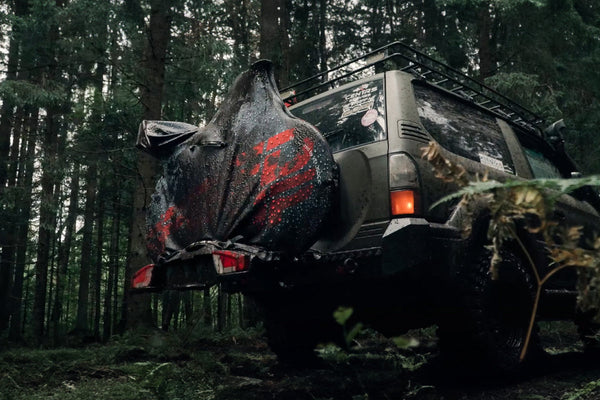
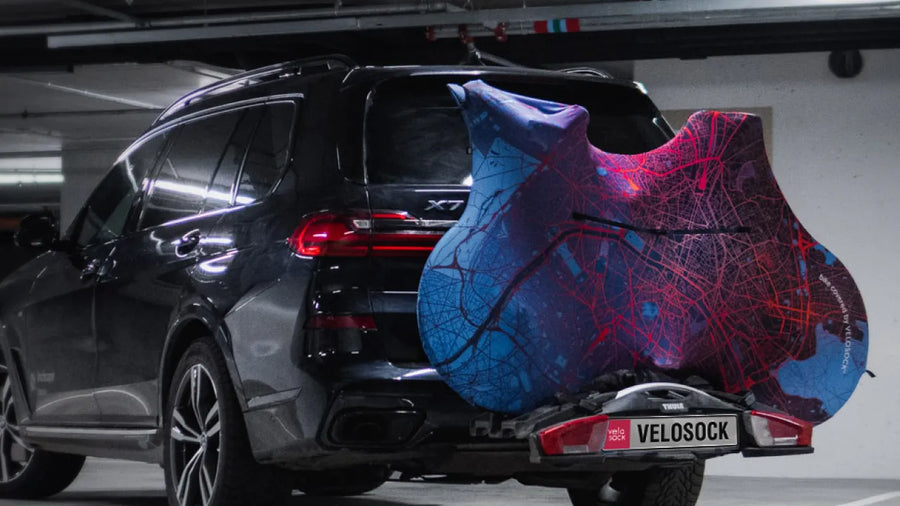
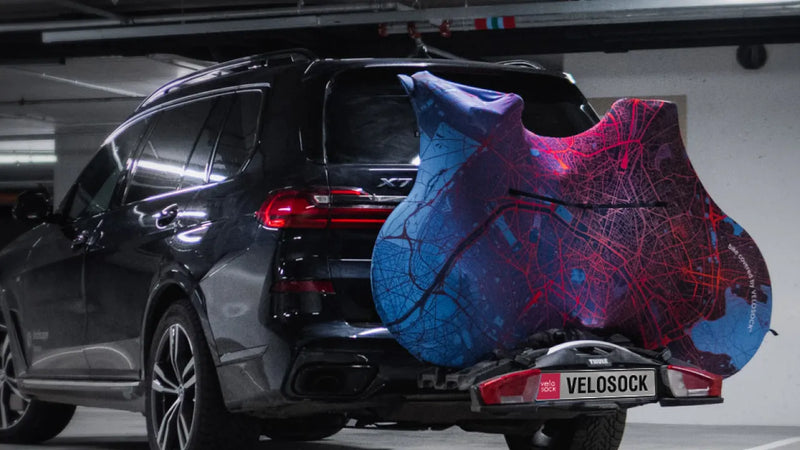
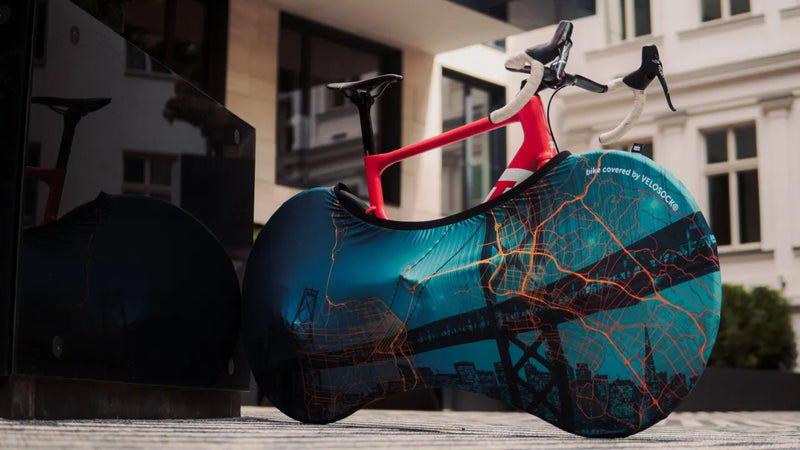
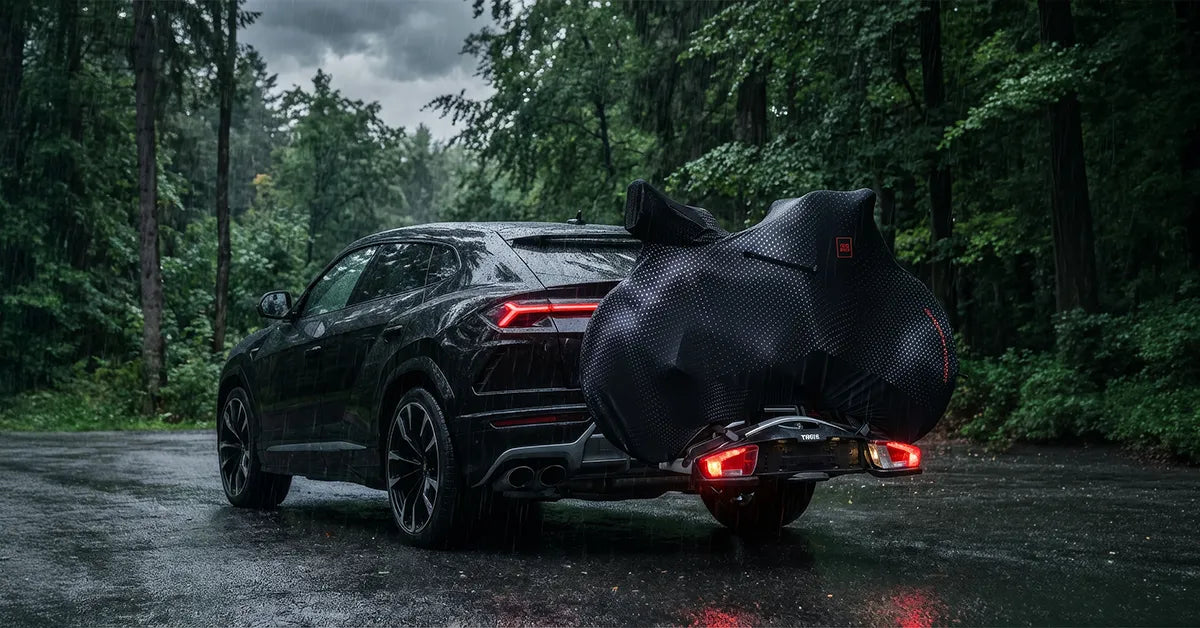
If the bike is travelling on a hitch rack, towbar rack, or the rear rack of a camper van or motorhome, it needs a cover cut to fit the bike, not a loose tarp thrown over the top. A fitted cover stays tight against the frame in the vehicle's slipstream, which is exactly why it doesn't flap and shred the way generic loose covers do at motorway speed.
Why It Matters for Race Weekend
Two to four hours on the motorway exposes an uncovered bike to rain, road spray, dead insects, UV, and grit thrown up by passing traffic — all of it landing directly on a drivetrain and frame you've just cleaned for race day. Velosock's bike covers for car racks come in standard, water-repellent and waterproof fabric, each suited to a different trip. The waterproof option carries a maximum authorised speed of 90 kph/56 mph with wind speed under 15 kph/9 mph, which covers the vast majority of motorway transfers to a race venue. General guidance is to drive at least 20 km/h below your rack's own rated maximum, and to check the bike doesn't sit taller than the vehicle roofline, since anything outside the turbulence zone adds drag rather than sitting protected within it. You can browse the full range of bike covers built for car-rack transport before you book travel.
The Mistake That Catches Riders Out
Fitting a cover straight over the bike without padding the stress points first. Quick-release levers, the rear derailleur, chainring and any contact point with the rack itself will wear a hole through any fabric over hundreds of kilometres. No fabric, however durable, is cut- or puncture-proof, which is exactly why Velosock covers ship with TEAR-AID Type A patches as the recommended fix for the occasional nick rather than pretending it can't happen. The other common mistake is assuming a roof-rack bike needs the same kind of cover: full coverage on a roof rack increases wind resistance and handling risk, so Velosock's covers are designed and rated for rear-mounted transport only, never for the roof.
| Fabric | Protection | Max speed (waterproof only) | Best for |
|---|---|---|---|
| Standard (rip-stop, breathable) | Light dust resistance, fast-drying | Not speed-rated for full waterproofing | Dry-weather trips, short transfers |
| Water-repellent | Blocks most sand, stones, road salt and dirt; resists some water | Follow rack manufacturer's general limit, 20 km/h below rated max | Mixed-weather race weekends |
| Waterproof | Full water protection, heavier fabric | 90 kph / 56 mph, wind under 15 kph / 9 mph | Long motorway legs, wet forecasts |
Don't let the drive undo your race prep
Hours of stone chips, insects and road spray on an uncovered bike can cost you more in touch-up paint and drivetrain cleaning than the race entry fee. Fit a cover built for rear-mounted transport before you leave the driveway.
Shop bike covers for car racks3. Bags, Shoes and Small-Gear Protection
What Goes In
Race shoes, a helmet, spare cleats, charging cables and a change of socks all need somewhere that isn't loose in the boot next to a dirty chain lube bottle. A dedicated stretch bag keeps this gear together and separate from clean clothing.
Why It Matters for Race Weekend
Velosock's multi-functional bag is described by the brand as good for over 100 uses, working equally well as a shoe bag, a laptop case, or a general sports bag. It's super stretchable, which means it adapts to an odd-shaped helmet or a pair of race shoes without needing a rigid case, and it's built to be easy to wash after a muddy MTB race or wet gran fondo. Because it protects from scratches and outside dirt, it's a sensible place to store anything you don't want touching your clean kit for the drive home, including used chamois or a damp base layer. A second bag in a different colour, like the black multi-functional bag, is an easy way to keep "clean" and "dirty" gear visually separated without labelling anything.
The Mistake That Catches Riders Out
Throwing everything loose into one holdall. Wet, muddy shoes against a clean jersey for a three-hour drive home is a guaranteed reason to do laundry the moment you walk in the door, and it's entirely avoidable with one extra bag.
4. Electronics, Documents and Race-Morning Essentials
What Goes In
Head unit or GPS watch and charger, spare batteries or a power bank, phone charger, race confirmation email or printed number, ID, insurance details, and cash for parking or a post-race coffee. For triathlon and multi-discipline events, add timing chip confirmation and any wetsuit or transition-specific paperwork.
Why It Matters for Race Weekend
Everything electronic should be charged the night before, not in the car on the drive, because most vehicles can't fast-charge a head unit and a phone simultaneously without one falling short by race time. Keeping cables coiled inside a small compartment of a multi-functional bag rather than loose in a glovebox means nothing goes missing at a 6am packing rush.
The Mistake That Catches Riders Out
Forgetting printed documentation when phone signal at the venue is poor. Rural race venues and campsite-based sportive starts often have patchy coverage, and a QR code that won't load at registration causes more stress than it should.
Conclusion
A genuinely well-packed race weekend covers four things: clothing that dries and performs across multiple efforts, small-gear storage that keeps clean and dirty kit apart, sorted electronics and documents, and a transport plan for the bike itself. That last one is the piece riders most often skip, yet it's the difference between arriving with a clean, race-ready machine and arriving with a chipped frame and a gritty drivetrain that needs attention before you even warm up. If the bike travels on a hitch rack, towbar rack, or the rear rack of a camper van, a fitted cover matched to the fabric and speed rating of your trip is as much a part of the kit list as spare tubes. Pair it with kit that manages moisture on repeated efforts and a stretch bag that keeps dirty gear contained, and the only thing left to worry about on race morning is the start line.
FAQs
What's the safest way to transport a bike to a race on a hitch rack?
Use a fitted transport cover matched to your travel conditions, pad sharp contact points like the quick release, derailleur and chainring before fitting it, and stay at least 20 km/h below your rack's rated maximum speed. Waterproof-fabric covers carry a maximum authorised speed of 90 kph/56 mph in winds under 15 kph/9 mph, which suits most motorway transfers to a venue.
Can I use a bike cover on a roof rack for a race weekend road trip?
No. Full-coverage bike covers are designed for rear-mounted racks, where the bike sits in the vehicle's slipstream. On a roof rack, full coverage increases wind resistance and can affect vehicle handling, so it isn't a safe or intended use. If your race-weekend transport setup relies on a roof rack, a fitted cover isn't the right tool for that job.
How many kits should I pack for a multi-day race weekend?
Two full kits at minimum, jersey plus bib shorts, so one can dry while the other is worn. Add a spare base layer and a packable rain layer if the forecast is uncertain, since laundry facilities are rarely available at race venues or campsites.
My rack fixes to the bike's seat post, will a transport cover still fit?
Not reliably. Road and triathlon/TT cover side zippers open to about 30 cm, which is designed for standard frame and tyre access rather than seat-post fixation points or multi-bike racks that need top-tube fixing arms. MTB covers have longer 73 cm side zippers, which give more clearance, but it's worth measuring your rack's fixation points against the cover's zipper openings before you travel.
For background on how UV exposure degrades outdoor fabrics over time, see this overview of UV index and exposure from the National Weather Service, and for the basics of how airflow and surface area affect drag on a moving vehicle, this NASA educational resource on aerodynamic drag is a useful primer.